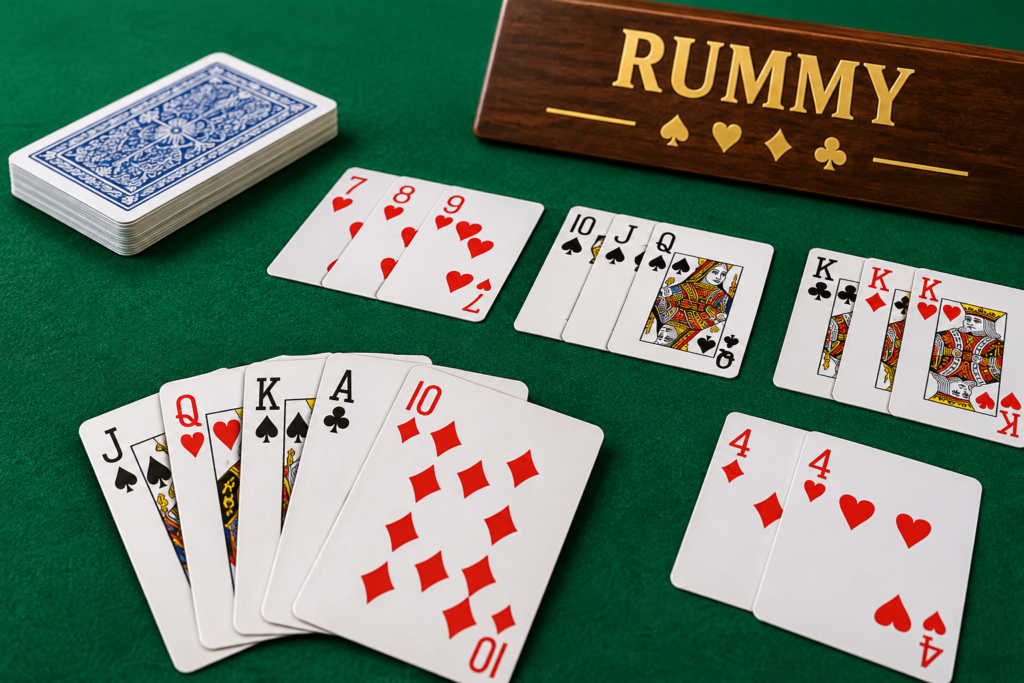
Introduction to Rummy 51
Rummy 51 is an interesting variation of the traditional rummy card game that combines planning, card combinations, observation, and decision-making. It attracts players who enjoy organizing cards into sequences and sets while trying to reduce the number of unmatched cards in their hands.
The number 51 has a special meaning in some versions of the game. It refers to the minimum point value required for a player’s initial meld before they can place combinations on the table. However, rules vary between platforms, and some games use the number 51 to describe a pool or elimination limit instead.
Whether you are a beginner learning the basics or an experienced card-game enthusiast exploring different formats, understanding the rules and gameplay structure is essential. This guide explains Rummy 51, its common rules, important features, useful strategies, and things to consider when choosing an online platform.
Website 1: https://newrummy.app/
Website 2: https://rummy-top.com/
What Is Rummy 51?
Rummy 51 is a card game based on the familiar principles of traditional rummy. Players draw cards, arrange them into valid combinations, and discard unwanted cards as they work toward completing their hands.
In the opening-threshold version, a player must first place valid combinations with a total value of at least 51 points. After meeting this requirement, the player can usually continue building combinations and adding eligible cards according to the table rules.
The main objective is generally to arrange cards efficiently and finish the hand before opponents do. Players must think carefully about which cards to keep, which to discard, and how their decisions may affect other players.
Before starting a game, check its rules panel. A version called Rummy 51 may follow different scoring, dealing, joker, and opening requirements from another version with the same name.
Main Features of Rummy 51
1. Strategic Card Combinations
Players must identify useful combinations and organize their hands efficiently. Recognizing possible sequences and sets can help reduce the number of unmatched cards.
2. The 51-Point Opening Requirement
In one popular format, the initial meld must reach at least 51 points. This requirement encourages players to plan their combinations instead of placing cards on the table immediately.
Some variations also require a pure sequence for the opening meld, while others do not. Always confirm the applicable rules.
3. Drawing and Discarding
Each turn generally involves drawing a card, reviewing the available combinations, and discarding an unwanted card. Good decisions throughout the round can improve the organization of a player’s hand.
4. Joker Cards
Jokers can act as substitutes for missing cards in many versions. Their exact use depends on the game rules, including whether they are allowed in particular opening combinations.
5. Different Ways to Play
Depending on the platform, players may find casual games, practice tables, competitive formats, or other variations. Availability and rules differ, so read the information displayed before joining a table.
Understanding the Basic Rules of Rummy 51
Learning the basic rules makes the game easier to follow and helps prevent avoidable mistakes.
Step 1: Understand the Card Setup
The number of players, decks, jokers, and cards dealt to each player depends on the selected version. Some forms of Rummy 51 use two decks, while other variations use different arrangements.
Review the table instructions before the first turn so you know exactly how the game operates.
Step 2: Learn About Sequences
A sequence is a group of three or more consecutive cards of the same suit.
For example:
- 4♥, 5♥, 6♥
- 7♠, 8♠, 9♠
- 10♦, J♦, Q♦, K♦
A pure sequence contains no joker replacing a natural card. An impure sequence may use a joker as a substitute when the rules permit it.
Step 3: Understand Sets
A set consists of cards with the same rank but different suits, subject to the game’s rules.
For example:
- 8♥, 8♠, 8♦
- K♥, K♣, K♠
Sets and sequences are important because they allow players to organize their cards into valid combinations.
Step 4: Reach the Opening Requirement
In the opening-51 format, players must create valid combinations totaling at least 51 points before making their first meld.
For example, a valid combination of high-value cards and sequences may help a player meet this threshold. Only combinations permitted by the chosen version should be counted.
Some versions additionally require a pure sequence, so reaching 51 points alone may not be sufficient.
Step 5: Continue Building Your Hand
After opening, players can generally place additional combinations or add cards to existing melds when permitted.
Continue reviewing your hand after each draw. A card that initially seems unnecessary may become useful when a new card completes a sequence or set.
Step 6: Finish the Round
The objective is generally to dispose of your cards through valid combinations and the required final action. The exact declaration and discard rules vary by format.
Understand the winning condition before playing so you know when a hand is considered complete.
Card Values and Scoring
Card values are important in versions that use a point-based opening requirement or calculate penalties for unmatched cards.
A commonly used scoring structure assigns numbered cards their face value and gives face cards such as kings, queens, and jacks 10 points each. Aces may count as one or eleven depending on their position and the applicable rules. Jokers can have special values.
| Card type | Common point value |
| Number cards 2–9 | Face value |
| 10, Jack, Queen, King | 10 points |
| Ace | Depends on the rules |
| Joker | Depends on the rules |
These values are examples, not universal rules. Different versions may assign different values or use another scoring method.
It is also important to distinguish an opening requirement from a pool limit. In an opening-51 game, 51 points may be needed to place the first meld. In a pool format, 51 may instead represent the cumulative penalty threshold at which a player is eliminated.
Practical Strategies for Rummy 51
No strategy guarantees a win, but thoughtful decisions can help you understand the game and avoid common errors.
Organize Your Cards Early
After receiving your cards, identify possible sequences and sets. Keep related cards together mentally or use the game’s sorting feature if available.
Recognizing your options early makes it easier to decide which cards deserve to be retained.
Focus on the Opening Requirement
If the selected format requires a 51-point opening, keep track of the total value of your valid combinations.
Avoid counting cards that do not form eligible melds. If the version requires a pure sequence, work toward that requirement as well.
Avoid Keeping Too Many Unrelated Cards
Holding several disconnected cards can make it harder to complete your hand. Review your options regularly and consider whether a card has a realistic role in a future combination.
Discard decisions should account for both your own hand and the cards opponents may be collecting.
Observe the Discard Pile
The discard pile can provide useful clues about which ranks and suits other players may be pursuing.
However, these clues are incomplete. Opponents may change their plans, and a discarded card does not always reveal their actual hand.
Use Jokers Carefully
Jokers can help complete combinations, but their value depends on the rules and your current hand.
Consider whether using a joker immediately is more helpful than keeping it available for another combination. Also check whether the opening requirement allows jokers in the combinations you intend to place.
Practise Before Playing Competitive Formats
Beginners can learn more comfortably in free or practice games where available. Practise identifying sequences, calculating points, and understanding the declaration rules.
Experience can improve familiarity with the game, but it cannot remove uncertainty from card draws or guarantee a particular outcome.
Rummy 51 Online: What Should You Look For?
Online card games make it possible to learn rules and explore different formats through a digital interface. Before selecting a platform, review its features carefully.
Clear Rules and Instructions
Choose a platform that explains its card values, opening requirements, joker rules, and scoring system. Clear instructions help players understand what is expected before a round begins.
Easy-to-Use Interface
A well-organized interface should make it easy to identify cards, understand available actions, and follow the progress of a round.
Practice Options
Where available, free practice modes can help new players understand the gameplay without risking money.
Transparent Terms
Read the platform’s terms, privacy policy, account requirements, and applicable restrictions. Do not assume that a promotional offer is cash, withdrawable balance, or a guaranteed benefit.
Device Compatibility
Check whether the service works with your device and operating system. If an app download is offered, use an official or otherwise verified source and review the permissions requested before installing it.
Responsible Play
Set limits on the time you spend playing. Do not treat card games as a reliable source of income, and do not chase losses.
Rules, platform availability, and legal restrictions can change. Confirm current requirements before using any online service.
Rummy 51 Bonus: What Does It Mean?
The phrase “Rummy 51 Bonus” may appear in searches related to card games, applications, or promotional offers.
It is important to distinguish the rules of the game from marketing language. A bonus may be subject to eligibility requirements, expiry dates, wagering or usage restrictions, and other terms. A promotional credit does not necessarily represent cash that can be withdrawn.
Before accepting an offer, read its complete conditions and confirm which games it applies to. Never rely on claims of guaranteed winnings or risk-free income.
The number 51 in a game’s title also does not automatically mean that a platform provides a ₹51 bonus. These are separate concepts that should be verified independently.
Common Mistakes Beginners Should Avoid
New players often make avoidable mistakes while learning Rummy 51.
Ignoring the specific variant: Different versions can have different opening and declaration rules. Read the table instructions before beginning.
Miscounting points: Calculate the values of valid combinations carefully rather than assuming every card in your hand contributes to the opening requirement.
Confusing sets with sequences: A sequence uses consecutive cards of the same suit, while a set uses cards of the same rank.
Using jokers incorrectly: Check whether jokers are permitted in the opening meld or a required pure sequence.
Discarding without thinking: A discarded card might help an opponent. Consider its possible usefulness before removing it from your hand.
Expecting guaranteed results: Luck, card distribution, and other players’ decisions all influence the outcome. No fixed pattern ensures a win.
Is Rummy 51 Suitable for Beginners?
Rummy 51 can be approachable for beginners who already understand basic card combinations. The familiar draw-and-discard structure makes it easier to learn, while an opening-point requirement can add an extra layer of planning.
A new player should start by learning sequences, sets, card values, and the winning condition. Once those basics are clear, the player can practise tracking the opening total and making better discard decisions.
If a version introduces unfamiliar rules, learn them separately rather than assuming that every Rummy 51 table works identically.
Frequently Asked Questions About Rummy 51
What is Rummy 51?
Rummy 51 is a name used for different rummy formats. In one version, players must place an initial meld worth at least 51 points before making further plays.
Why is it called Rummy 51?
In the opening-threshold version, the name refers to the minimum point value required for the initial meld. In other formats, the number may refer to a pool limit or another rule.
Can beginners play Rummy 51?
Yes. Beginners can start by learning basic card combinations, understanding the applicable rules, and practising in free modes where available.
Are jokers allowed in Rummy 51?
Jokers are allowed in many versions, but their use depends on the rules. Some formats restrict jokers in particular opening combinations.
Does Rummy 51 guarantee winnings?
No. Understanding the rules can help you make informed decisions, but it cannot guarantee a win or a financial return.
Is Rummy 51 the same as 51 Pool Rummy?
Not necessarily. An opening-51 format may require a 51-point initial meld, whereas 51 Pool Rummy may use 51 as a cumulative penalty or elimination limit.
What should I check before choosing an online platform?
Review the rules, practice options, privacy policy, terms of service, device compatibility, and applicable legal restrictions. Verify all promotional claims independently.
Conclusion
Rummy 51 offers an engaging way to explore card combinations, careful planning, and decision-making. Its appeal comes from the familiar mechanics of rummy combined with additional rules that may require players to meet an opening threshold or manage cumulative scores.
The most important step is to understand which version you are playing. Learn how sequences and sets work, check card values, understand the role of jokers, and confirm the winning conditions before starting.
If you are exploring online rummy resources, compare the available information and read the rules carefully. Use practice options where available, protect your personal information, and approach gameplay as entertainment rather than a guaranteed way to make money.
With a clear understanding of the rules and a patient approach, beginners can build their knowledge of Rummy 51 while experienced players can continue refining their decision-making skills.
Important Website Links
Explore the following websites for more information about Rummy 51 and related rummy topics:
Website 1: https://newrummy.app/
Website 2: https://rummy-top.com/
Note: These links are provided as requested. Check each website’s current content, terms, and availability independently before using its services.
