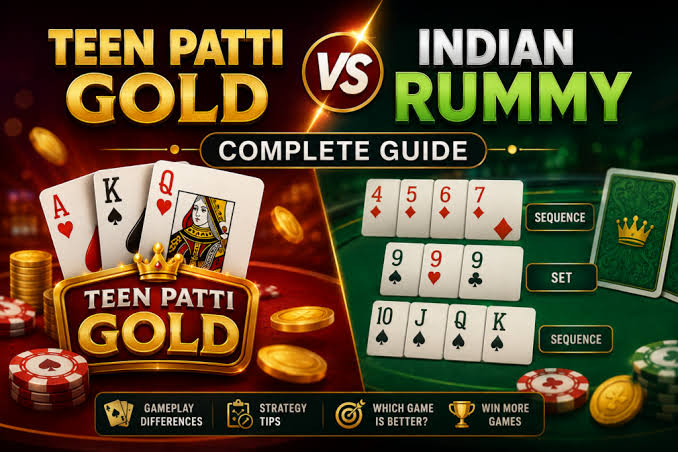
Indian card games have been a popular form of entertainment for generations. Among the most recognizable options are Rummy and master slots Teen Patti, two games that combine traditional card-playing experiences with different rules, objectives, and gameplay styles. Today, these games are also available through various digital platforms, allowing users to explore familiar formats on smartphones and computers.
Although both games use playing cards, their mechanics are quite different. Rummy focuses on arranging cards into valid sequences and sets, while Teen Patti involves comparing three-card combinations. Understanding the basic rules of each game can help beginners become more familiar with their gameplay. This guide explains Rummy and Teen Patti rules, common variations, and important considerations for players.
Understanding the Basics of Indian Card Games
Traditional Indian card games are generally played with standard playing-card decks. Depending on the game and variation, players may receive different numbers of cards and follow specific rules for completing a round.
Rummy and Teen Patti are especially recognizable because they offer different styles of interaction. Rummy requires players to organize cards into combinations, whereas Teen Patti focuses on identifying and comparing hand rankings.
Before starting either game, players should check the specific version’s instructions because rules can vary between platforms.
Rummy Rules and Gameplay
Rummy is a card game in which the main objective is to arrange cards into valid sequences and sets. Players generally draw cards and discard unwanted ones while trying to complete the required combinations.
1. Understanding Sequences
A sequence consists of consecutive cards from the same suit. For example, 4, 5, and 6 of hearts form a valid sequence.
A pure sequence is formed without using a joker. Many Rummy variations require at least one pure sequence for a valid declaration.
2. Understanding Sets
A set contains cards of the same rank but different suits. For example, a 7 of hearts, 7 of clubs, and 7 of diamonds can form a set.
The exact rules regarding repeated suits and jokers depend on the selected Rummy variation.
3. Drawing and Discarding Cards
Players usually take one card from an available draw pile or discard pile and then discard one card. This process continues until someone completes the required combinations and makes a valid declaration.
4. Making a Valid Declaration
A declaration generally requires arranging all cards into permitted sequences and sets. Players should understand the minimum sequence requirements and other conditions before declaring.
Teen Patti Rules and Gameplay
Teen Patti is a traditional Indian three-card game. It is often compared to poker because both involve evaluating card combinations, although their rules and hand rankings are different.
In a standard version, each player receives three cards, usually dealt face down. Players then compare their combinations according to the game’s ranking system.
1. Trail or Three of a Kind
A trail consists of three cards of the same rank. For example, three kings form a trail.
2. Pure Sequence
A pure sequence contains three consecutive cards from the same suit, such as 5, 6, and 7 of diamonds.
3. Sequence
A sequence consists of three consecutive cards that do not all belong to the same suit.
4. Color
A color contains three cards from the same suit that do not form a sequence.
5. Pair
A pair includes two cards of the same rank and one additional card.
6. High Card
If none of the other combinations is formed, the hand is evaluated using its highest card according to the applicable ranking rules.
In many standard Teen Patti formats, these categories are ranked from trail to high card. However, special variations may use different rules.
Key Differences Between Rummy and Teen Patti
Although both games use playing cards, their objectives are different.
| Feature | Rummy | Teen Patti |
| Main objective | Create valid sets and sequences | Compare three-card hands |
| Card combinations | Sets and sequences | Trails, sequences, pairs, and more |
| Gameplay focus | Card organization | Hand rankings |
| Typical card count | Often 13 cards | Usually 3 cards |
| Main skill element | Planning combinations | Understanding rankings and decisions |
Rummy generally involves organizing cards over multiple turns, while Teen Patti focuses on evaluating a three-card hand.
Tips for Beginners
New players can improve their understanding by following a few practical guidelines:
- Learn the complete rules before joining a game.
- Understand card rankings and valid combinations.
- Use practice modes when available.
- Read the instructions for different game variations.
- Avoid making decisions without understanding the rules.
- Never assume that previous results guarantee future outcomes.
If a platform offers paid participation, review its terms, fees, and local legal requirements before proceeding.
Online Safety and Responsible Gaming
Before installing a card-game application, verify the publisher and download source. Review the application’s permissions, privacy policy, and security features.
Use strong passwords and never share account credentials or verification codes. If deposits, withdrawals, or promotional offers are available, carefully examine the applicable conditions.
Card games involving real-money participation can carry financial risks. Set personal limits, avoid chasing losses, and treat gaming as entertainment rather than an income opportunity. Follow applicable age restrictions and local laws.
Conclusion
Rummy and Teen Patti represent two master slots game important styles of traditional Indian card gaming. Rummy emphasizes creating valid sequences and sets, while Teen Patti focuses on understanding and comparing three-card combinations.
Learning their basic rules, hand rankings, and gameplay procedures makes it easier for beginners to understand these popular card formats. Whether exploring traditional card games or their digital versions, players should prioritize understanding the rules, choosing trustworthy platforms, and maintaining responsible gaming habits.
Frequently Asked Questions
1. What is the main difference between Rummy and Teen Patti?
Rummy focuses on arranging cards into sequences and sets, whereas Teen Patti involves comparing three-card combinations.
2. How many cards are used in Teen Patti?
In the standard version, each player receives three cards.
3. What is a pure sequence in Rummy?
A pure sequence consists of consecutive cards from the same suit without using a joker.
4. Which Teen Patti hand is strongest?
A trail, also known as three of a kind, is generally the strongest standard hand.
5. Can beginners learn Rummy and Teen Patti?
Yes. Beginners can learn both games by studying the rules, understanding card combinations, and practicing with free versions where available.
6. Are online versions identical to traditional games?
Not always. Digital versions may include additional features, different formats, or modified rules, so checking the instructions is important.
