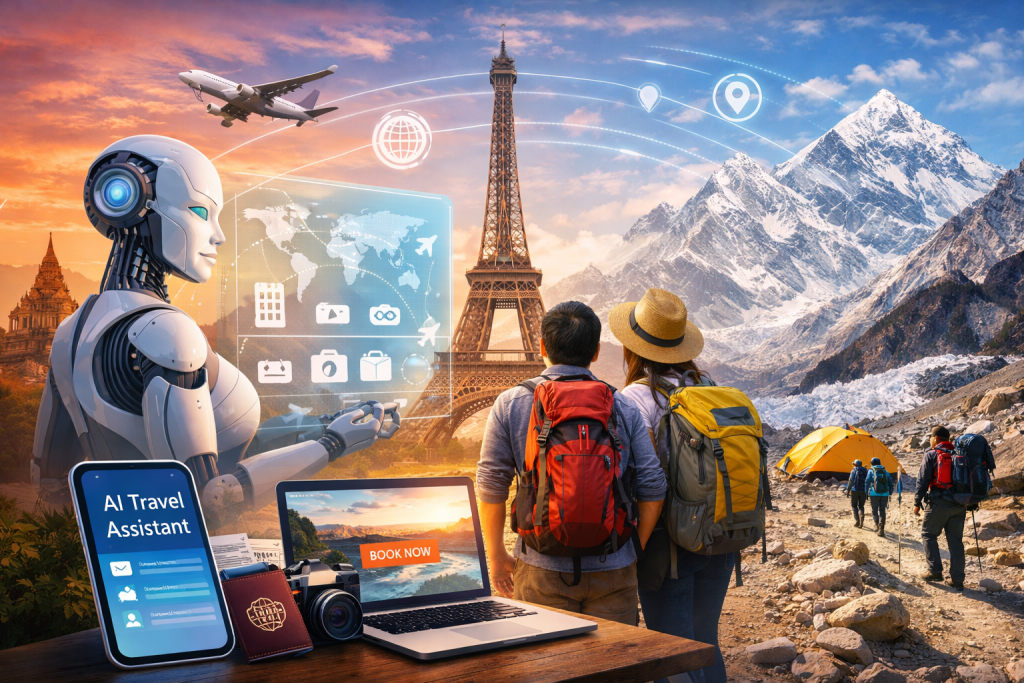
Artificial Intelligence (AI) is transforming nearly every industry, and travel is one of the sectors experiencing the most visible and rapid change. From personalized trip planning and smart pricing to virtual travel assistants and automated customer service, AI is reshaping how people plan, book, and experience travel.
What once required travel agents, hours of research, and uncertainty can now be done in minutes with highly personalized recommendations. As AI continues to evolve, it is not only making travel more convenient but also more efficient, affordable, and customized.
The Rise of Personalized Travel Planning
One of the biggest ways AI is changing travel trends is through personalization. In the past, travelers would search for destinations, hotels, and flights manually, often comparing dozens of websites. Today, AI-powered platforms analyze user behavior, preferences, budgets, previous trips, and even browsing history to recommend destinations and travel plans tailored specifically to each traveler.
Travel companies use AI algorithms to understand what travelers like — whether it is adventure travel, luxury hotels, cultural experiences, or budget trips. Based on this data, platforms can suggest destinations, travel dates, hotels, restaurants, and activities that match the traveler’s interests. This level of personalization has changed traveler expectations. People now expect travel platforms to “know” what they want.
For example, if someone frequently searches for beach destinations and luxury resorts, AI systems will prioritize similar recommendations in future searches. Over time, the recommendations become more accurate and useful.
A good example of personalized travel planning is the Everest Base Camp (EBC) trek in Nepal. Many travelers now use AI-powered travel platforms to generate personalized Everest base camp trek itinerary based on fitness level, number of days available, budget, and preferred accommodation type.
AI travel tools can now help trekkers plan acclimatization days, suggest the best seasons (spring and autumn), estimate trekking difficulty, recommend packing lists, and even predict weather conditions. This shows how AI is not only helping with simple travel bookings but also complex adventure travel planning like the Everest Base Camp trek.
AI Chatbots and Virtual Travel Assistants
Another major trend is the rise of AI chatbots and virtual assistants in the travel industry. Many airlines, hotels, and booking platforms now use AI-powered chatbots to help customers with bookings, cancellations, travel information, and customer support.
These chatbots are available 24/7, which improves customer service and reduces waiting times. Travelers can ask questions like:
- “Find me the cheapest flight next week”
- “Suggest hotels in Paris under $100”
- “What documents do I need to travel to Japan?”
AI assistants can respond instantly, making travel planning faster and easier. Some advanced AI travel assistants can even build full travel itineraries including flights, hotels, transportation, and activities.
This trend is reducing the reliance on traditional travel agencies while making travel planning more accessible to everyone.
Smart Pricing and Dynamic Pricing
AI is also changing how travel pricing works. Airlines, hotels, and travel booking websites use AI algorithms to adjust prices dynamically based on demand, season, availability, events, and even user behavior.
For example, flight prices may change depending on:
- Time of booking
- Demand for the route
- Weather
- Holidays or events
- Remaining seats
- User search history
This is called dynamic pricing. AI helps companies maximize profits while also helping travelers find better deals by predicting price changes. Some platforms even notify users when prices are expected to drop or increase.
As a result, travelers are becoming more strategic about when and how they book trips.
AI in Travel Recommendations and Discovery
AI is also influencing how people discover new travel destinations. Social media platforms and travel websites use AI recommendation systems to show destinations, travel videos, and travel blogs based on user interests.
For example, if someone watches videos about mountain trekking, the platform may recommend destinations like Nepal, Switzerland, or Peru. If someone searches for food tourism, AI may suggest destinations known for cuisine such as Italy, Thailand, or Japan.
This trend is changing travel patterns because people are increasingly choosing destinations based on AI recommendations rather than traditional travel guides.
Automation in Airports and Hotels
AI is also improving travel experiences through automation. Many airports now use AI for:
- Facial recognition check-in
- Automated security screening
- Smart luggage tracking
- Predicting flight delays
Hotels are also using AI for automated check-in, smart room controls, and robot room service in some hotels. Smart hotel rooms can adjust lighting, temperature, and entertainment based on guest preferences.
These technologies reduce waiting time and improve the overall travel experience.
AI for Travel Safety and Risk Prediction
AI is also helping improve travel safety. AI systems can analyze weather patterns, political situations, natural disasters, and health risks to warn travelers about potential dangers. Airlines also use AI to predict aircraft maintenance issues before they become serious problems, which improves safety and reduces delays.
Travel insurance companies also use AI to assess travel risks and process claims faster.
The Impact on Travel Jobs and the Industry
While AI is improving efficiency, it is also changing jobs in the travel industry. Some traditional roles like travel agents and customer service representatives are decreasing due to automation. However, new jobs are being created in areas such as AI system management, data analysis, digital marketing, and travel technology development.
The travel industry is becoming more technology-driven, and companies that adopt AI are gaining a competitive advantage.
Future Travel Trends with AI
In the future, AI may completely transform travel experiences. Some possible future trends include:
- Fully automated trip planning
- AI travel companions
- Virtual reality travel previews
- Smart airports with no check-in lines
- Personalized travel packages generated instantly
- AI translation for real-time communication in foreign countries
Travel may become more seamless, where AI manages everything from booking to navigation to recommendations during the trip.
Conclusion
Artificial Intelligence is changing travel trends in many ways, including personalized travel planning, smart pricing, automated customer service, improved safety, and airport automation. Travelers are now relying more on AI tools to plan trips, find deals, and discover new destinations.
As AI technology continues to grow, the travel industry will become more efficient, more personalized, and more technology-driven. In the future, travel planning may become almost fully automated, making travel easier and more accessible for people around the world.
AI is not just changing how we travel — it is changing how we choose where to go, how we plan our trips, and how we experience the world.
